Rwanda has the soils, climate and growing interest in horticulture to become a stronger supplier of fresh fruits and vegetables to regional and international markets.
But for businesses trying to turn that potential into a commercially viable industry, the challenge is not simply growing more produce. It is ensuring that farmers can produce consistently, exporters can move their goods competitively, and the entire value chain can meet the demands of buyers.
For Christian Mugunga, founder of MCF Star, an agribusiness company based in Gasabo District, the difficulties are particularly evident in the avocado trade. He says competition from Kenyan buyers can encourage farmers and collectors to harvest avocados before they are mature enough for export markets.
“When buyers come and take avocados before they are mature, it becomes difficult for the sector to grow. You may want to supply markets such as China or Dubai, but you cannot find enough mature fruit because much of the harvest has already been taken,” he says.
Mugunga says the problem is compounded by limited cargo capacity. Exporters may have buyers and produce ready, but insufficient space on aircraft can delay shipments and increase losses. “The biggest challenge for us is cargo space. We need enough capacity to move the produce, but when it is not available, the business suffers. You can have the fruit and the market, but if you cannot transport it in time, you lose,” he says. These constraints illustrate a wider challenge facing Rwanda’s horticulture industry: the need to build a reliable, competitive value chain that connects production with markets.
Building reliable supply
The sector’s potential is recognised by the National Agricultural Export Development Board (NAEB), which says Rwanda is transitioning from predominantly smallholder production towards a more commercially organised and competitive export industry.
Claude Bizimana, Chief Executive Officer of NAEB, says fragmented production, low productivity and inconsistent supply make it difficult for exporters and processors to secure adequate volumes and maintain uniform quality.
“Most fruit production comes from smallholder farmers cultivating scattered plots. This makes it difficult to consolidate consistent volumes, ensure uniform quality, and establish reliable supply arrangements with exporters and processors,” he says.
The challenge is particularly significant for perennial crops such as avocado and macadamia, which require substantial initial investment and take several years to reach full commercial productivity. Bizimana says existing financing arrangements do not always accommodate these long production cycles.
He adds that limited irrigation, pest and disease pressures, and the relatively young age of many orchards also constrain productivity and marketable volumes.
For Angel Uwantege of Bahage Foods Ltd, which farms and exports fresh fruits and vegetables to the European Union, the United Kingdom and the Middle East, consistent production is central to competitiveness.
“Most farmers operate on small farms of approximately one to five hectares, making it difficult to supply sufficient export volumes consistently throughout the year, especially due to crop rotation,” she says.
However, Uwantege sees an opportunity in the quality of produce from smallholder farms. She says traditional avocado-growing methods, often involving limited chemical inputs, can offer advantages in international markets.
The opportunity, she says, depends on strengthening farmers’ knowledge of food safety, traceability, pesticide management, recordkeeping, hygiene and proper pre- and post-harvest practices. Certification, including GLOBALG.A.P., can also be difficult for smallholders because of the cost and technical requirements.
“Producing fruits is only one part of the equation. Farmers and other players in the value chain must also be able to supply markets consistently, in terms of both volume and quality, while remaining competitive internationally,” says Arcade Nshimiyimana, Executive Secretary of the Youth Engagement in Agriculture Network (YEAN).
Nshimiyimana says Rwanda has favourable soils and considerable potential for fruit production, but many farmers lack the technical knowledge, skills and resources needed to produce commercially.
“Take passion fruit farming, for example. Some farmers lack adequate knowledge of recommended production practices, including nursery management, proper land preparation, sourcing quality seeds and maintaining healthy plants through appropriate pruning and crop management,” he says.
Access to certified seeds and quality planting materials remains another constraint. Nshimiyimana says the development and certification of improved varieties require investment and time, sometimes taking years before farmers can access them. Imported quality seeds are available, but their high cost places them beyond the reach of many growers.
Lowering the cost of getting produce to market
Even when farmers and exporters can produce the required quality, logistics can undermine their competitiveness.
Uwantege says airfreight accounts for approximately 55 to 65 per cent of Bahage Foods’ total export price, leaving a limited margin to cover production, packaging and other operating costs.
“Limited cargo flights and direct destinations also force exporters to use connecting flights and third-party freight companies, increasing transit times and affecting product freshness and competitiveness,” she says. Mugunga similarly identifies cargo capacity as a major obstacle, alongside the costs associated with exporting. He also raises concerns about taxes and the expenses of handling and storing produce.
For Bizimana, Rwanda’s landlocked position, dependence on expensive airfreight for certain perishable products and concentration in a limited number of export destinations increase costs and market risks.

He says addressing these constraints requires investment in logistics and market diversification, as well as stronger coordination between public institutions and private businesses.
Uwantege proposes more competitive airfreight rates, increased cargo capacity and expanded direct flight destinations. She also calls for improvements to sea-freight solutions, particularly for fruits such as avocados, which could reduce export costs.
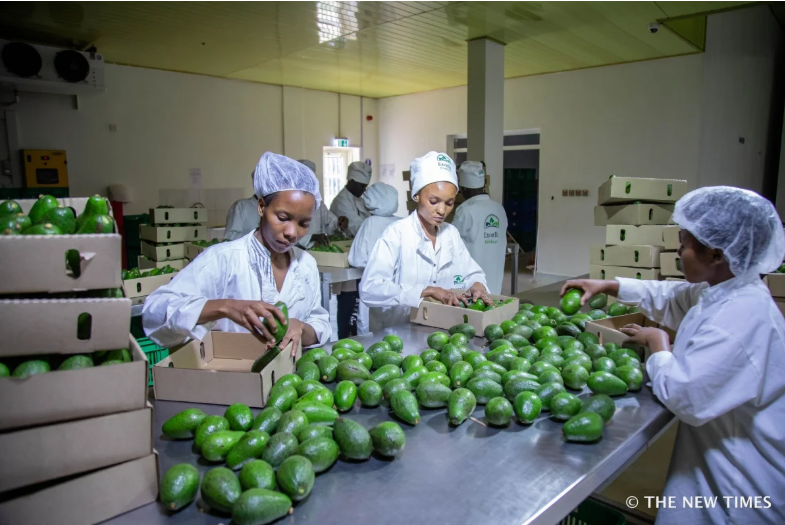
The need for better infrastructure extends beyond transport. Uwantege says modern packhouses with adequate sorting and grading areas, pre-cooling facilities and cold storage are essential to maintaining quality, extending shelf life and reducing post-harvest losses.

NAEB says it provides access to a centralised packhouse and specialised export quality inspection and testing infrastructure. Bizimana says these services help exporters identify quality and compliance problems before shipments leave Rwanda, reducing the risk of rejection in destination markets.
Making investment viable
For businesses looking to expand, access to affordable working capital is another pressing concern. Uwantege says exporters must finance production, farmer payments, packaging, labour, transportation and airfreight before receiving payments from buyers. High interest rates and limited access to suitable financing make it difficult to increase export volumes and maintain consistent operations. She also points to the cost of imported packaging materials, seeds and agricultural inputs, as well as the limited availability of skilled agricultural labour.
Bizimana says the sector needs financing products suited to long-term investments in fruit production, including longer grace periods, appropriate repayment schedules, credit guarantees and blended finance. He also identifies the need for stronger farmer organisation and transparent production and marketing contracts linking farmers, cooperatives, aggregators, exporters and processors.
Such arrangements could improve production planning, supply reliability and quality management while giving businesses greater confidence to invest. Uwantege says investment in modern irrigation could also improve productivity and consistency. From her experience, farmers using systems such as centre pivots can achieve approximately 40 to 50 per cent higher production than smallholders relying on pumps and generators.

Access to quality seedlings and inputs is equally important. She warns that some outgrowers use cheaper, lower-quality seedlings, which can increase pest and disease problems and lead to greater reliance on chemicals that may not meet international market requirements.
Turning potential into a competitive industry
NAEB says the development of Rwanda’s horticulture industry requires sustained institutional support alongside increased private-sector investment. Bizimana says NAEB provides extension services, supports pest and disease management, facilitates international certification and promotes Rwandan produce in new markets.

He says these services help reduce the operational and compliance risks that individual exporters, particularly emerging businesses, would otherwise have to manage independently. But he emphasises that commercial production, aggregation, processing, logistics and marketing increasingly need to be led by private businesses, supported by public institutions that provide technical services, quality assurance, infrastructure and market facilitation. He also calls for stronger coordination among NAEB, the Ministry of Agriculture and Animal Resources, the Rwanda Agriculture and Animal Resources Development Board, the Rwanda Inspectorate, Competition and Consumer Protection Authority and other stakeholders to align interventions with industry needs. For exporters and farmers, the way forward lies in addressing several constraints together: increasing reliable production, improving technical capacity, making finance more accessible, strengthening post-harvest infrastructure and reducing the cost of reaching international markets.
Rwanda’s horticulture potential is considerable. Realising it, however, will depend on whether the sector can build the systems that allow farmers and businesses to deliver quality produce consistently, at a price that keeps them competitive.