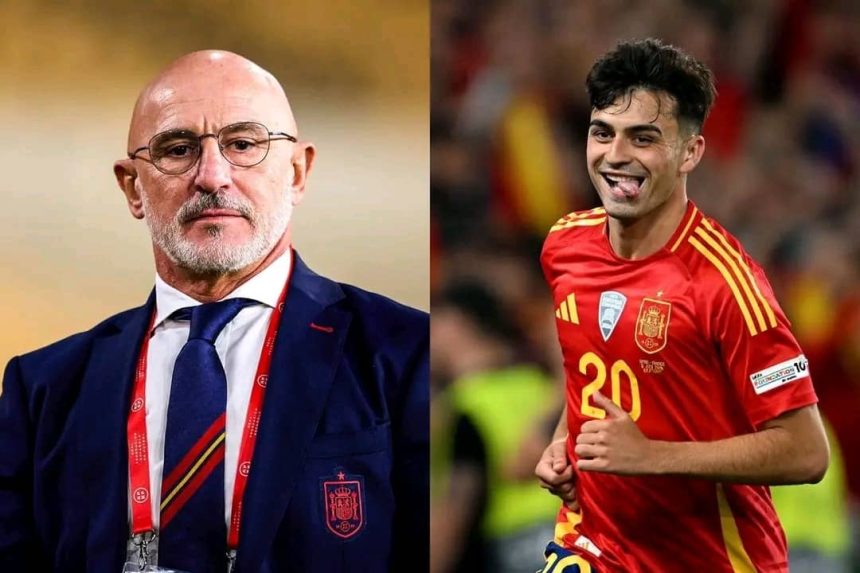
Spain’s 3-2 defeat to England in the UEFA Nations League has reignited debate over Luis de la Fuente’s team selection, particularly his decision to leave Pedri and Fermín López out of the starting lineup.
Spain suffered a disappointing 3-2 defeat against England at the Metropolitano Stadium in Madrid on Sunday, November 15, 2026, in a UEFA Nations League encounter that exposed concerns about the team’s midfield selection and tactical approach.

Head coach Luis de la Fuente faced questions over his decision to start with Mikel Merino, Martín Zubimendi and Fabián Ruiz in midfield, while Barcelona stars Pedri and Fermín López began the match on the bench.
Against a strong and physically competitive England side, Spain struggled to establish control during the first half. They found it difficult to play out from the back, maintain possession in dangerous areas and build attacking moves. Lamine Yamal, one of Spain’s main attacking threats, often appeared isolated, with England limiting the space available for him to influence the game.
England capitalised on Spain’s struggles, with Harry Kane converting a penalty just before half-time to give the visitors a 1-0 lead.
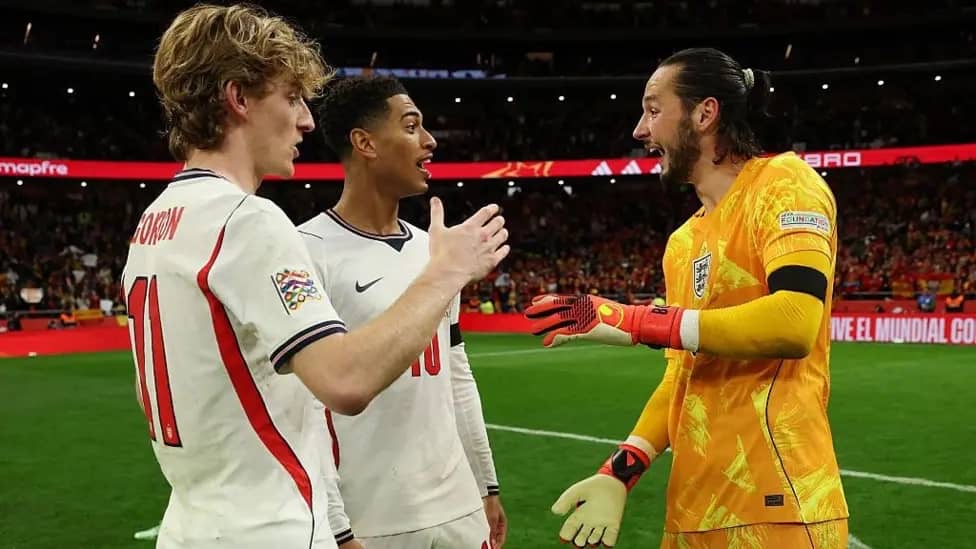
De la Fuente responded by introducing Pedri and Fermín López at the beginning of the second half, alongside defender Dean Huijsen. However, the changes initially failed to prevent England from extending their advantage.
Ezri Konsa made it 2-0 in the 53rd minute before Ben White scored England’s third goal four minutes later, putting Spain in a difficult position.
Despite the setback, Spain gradually found greater attacking rhythm. Mikel Oyarzabal converted a penalty in the 65th minute before Nico Williams reduced the deficit further in the 75th minute, following an assist from Lamine Yamal.
Spain continued pushing for an equaliser, creating several opportunities, but England held on to secure a memorable 3-2 victory.
Fermín López’s Growing Importance
Beyond the result, the match has raised an important question about Fermín López’s place in the Spanish national team.

The Barcelona midfielder has consistently demonstrated his attacking qualities at club level, combining intelligent movement, creativity, energy and an ability to arrive in dangerous positions.
His introduction against England offered another opportunity to demonstrate what he can contribute to Spain’s midfield. Alongside Pedri, he helped provide additional attacking options and gave Spain greater presence in the final third.
For many observers, the bigger question is why De la Fuente continues to limit Fermín’s opportunities in the starting lineup, despite the midfielder’s impressive performances for Barcelona.
Regular involvement could allow him to develop stronger connections with his international teammates, understand the team’s tactical demands and establish himself as an important part of Spain’s attacking system.
While Spain’s late comeback demonstrated their attacking potential, the defeat also highlighted the importance of making the right selection decisions from the beginning.
For De la Fuente, the challenge now is to find the right midfield balance ahead of Spain’s next international assignments, with Pedri and Fermín’s roles likely to remain part of the wider discussion.