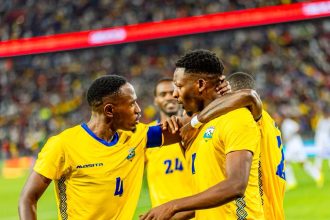
For more than two decades, Rwanda’s national football team, the Amavubi, has carried an unfinished dream: returning to the Africa Cup of Nations (AFCON).
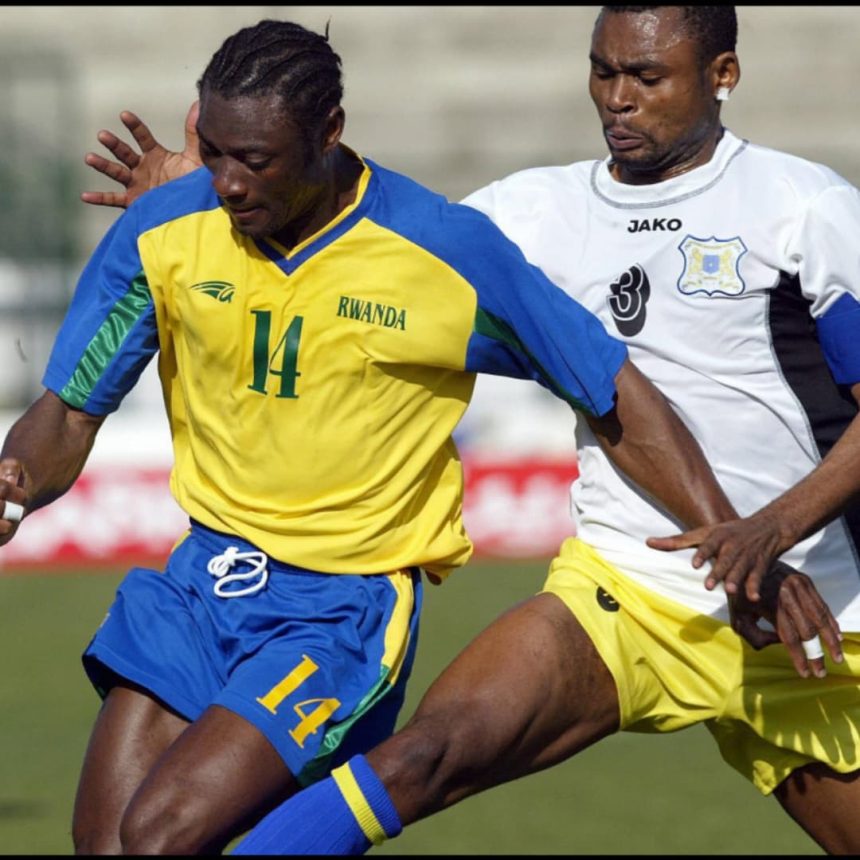
The country’s only appearance at the continental tournament came in Tunisia in 2004. That historic achievement remains one of the proudest moments in Rwandan football, but it has also become a reminder of how long the country has waited for another opportunity.
Now, on November 17, 2026, the Amavubi face Mali in a crucial 2027 AFCON qualifying encounter at Amahoro Stadium in Kigali.
The match represents more than another international football fixture. It is an opportunity for Rwanda to strengthen its position in the race to end a 22-year absence from Africa’s biggest football competition.
There is also an interesting generational story behind this campaign: some of the players representing Rwanda today were not even born when the Amavubi made their AFCON debut in 2004. Others were still babies or young children.
Today, they are professional footballers, and some are already married.
In other words, an entire generation has grown up without experiencing Rwanda at AFCON.
RWANDA’S HISTORIC AFCON DEBUT IN 2004
Rwanda qualified for the 2004 Africa Cup of Nations in Tunisia under Serbian coach Ratomir Dujković.
It was the country’s first appearance at the continental tournament, and the Amavubi were placed in Group A alongside hosts Tunisia, Guinea and the Democratic Republic of Congo.
Rwanda opened its campaign against Tunisia on January 24, 2004, losing 2–1. Despite the defeat, the team demonstrated its ability to compete at the highest level of African football.
On January 28, Rwanda secured a 1–1 draw against Guinea. Karim Kamanzi scored Rwanda’s equaliser in the closing moments of the match, earning the country its first-ever point at AFCON.
The Amavubi then completed their group campaign with a memorable 1–0 victory over DR Congo on February 1. Saidi Abedi Makasi scored the decisive goal, giving Rwanda its first victory in the history of the competition.
Rwanda finished third in the group with four points, behind Tunisia and Guinea, and consequently missed out on the quarter-finals.
Although the team did not progress beyond the group stage, its performance was widely regarded as an important achievement for Rwandan football.
The 2004 generation had demonstrated that Rwanda could compete against established African football nations.
THE HEROES WHO MADE HISTORY
Several players became important figures in Rwanda’s historic AFCON campaign.
Olivier Karekezi was among the prominent attacking players, while Jimmy Gatete represented the country’s striking power.
Désiré Mbonabucya captained the historic team, and Saidi Abedi Makasi became particularly memorable for scoring the winning goal against DR Congo.
Other players, including Hamad Ndikumana, Eric Nshimiyimana and Karim Kamanzi, also contributed to the country’s first continental appearance.
Their achievement remains a significant chapter in Rwanda’s football history.
More than two decades later, the country is still searching for another generation capable of recreating that historic experience.
THE GENERATION GAP: SOME AMAVUBI PLAYERS WERE NOT EVEN BORN!
Perhaps one of the most interesting aspects of Rwanda’s current AFCON campaign is the generational difference between the players who represented the country in 2004 and those wearing the national colours today.
When Rwanda played its first AFCON match against Tunisia on January 24, 2004, some of today’s footballers had not yet been born.
A player born in 2004 was only a baby during that historic tournament. Those born in 2005 and 2006 were not even part of the world when Rwanda defeated DR Congo.
Today, those same generations are adults, professional footballers and members of the national team.
Some have even started families and are already married.
Think about that for a moment!
Rwanda has gone through an entire generation without returning to AFCON. Some supporters who celebrated the country’s first appearance are now parents, while some of the players representing the country today were born after that historic campaign.
For many young Rwandans, AFCON has only been something they watch on television, rather than a tournament in which their own national team participates.
This is no longer just a football statistic. It is a generational story.
RWANDA VS MALI: A CRUCIAL BATTLE FOR THE 2027 AFCON DREAM
The Amavubi face Mali on Tuesday, November 17, 2026, in the fourth round of Group K qualifying matches for the 2027 Africa Cup of Nations.
The encounter will take place at Amahoro Stadium in Kigali, with kick-off scheduled for 9:00 PM Rwanda time.
The fixture comes just four days after the two countries met in Bamako, where Mali secured a dramatic 3–2 victory.
That defeat was particularly painful for Rwanda because the Amavubi had taken the lead twice but eventually surrendered all three points.
WHAT HAPPENED IN BAMAKO?
Rwanda made an impressive start to the match on November 13.
Jojea Kwizera opened the scoring in the 29th minute, giving the visitors an early advantage.
Mali responded through Kamory Doumbia, who equalised in the 43rd minute.
Nine minutes into the second half, Phanuel Kavita restored Rwanda’s lead, raising hopes of a valuable away victory.
However, Mali responded again. Moussa Kounfolo Yeo scored in the 63rd minute to make it 2–2.
With the match approaching its conclusion, Mamadou Camara scored the decisive goal in the 84th minute, completing Mali’s comeback.
The result left Rwanda disappointed, particularly because the team had demonstrated that it could challenge one of Africa’s strongest sides.
WHERE DO THE AMAVUBI STAND IN GROUP K?
Following the third round of matches, Mali lead Group K with nine points from three matches.
Rwanda occupy second position with six points, while Cape Verde have three points. Liberia remain at the bottom without a point.
The qualifying format gives the top two teams in the group automatic places at the 2027 Africa Cup of Nations.
This means Rwanda remain in a promising position despite their defeat in Bamako.
However, the return match against Mali could significantly influence the direction of the qualification campaign.
A victory would take Rwanda to nine points, level with Mali, and make the competition for the two qualifying positions even more interesting.
A draw would take Rwanda to seven points, keeping them in second place before the remaining fixtures, depending on Cape Verde’s result.
A defeat would leave Rwanda on six points and give Cape Verde an opportunity to close the gap.
There would still be two qualifying matches remaining in March 2027, meaning Rwanda would not automatically be eliminated by a defeat.
Nevertheless, the pressure would increase considerably.
WHY MALI ARE FAVOURITES
Mali enter the encounter with a stronger statistical position.
They have won all three of their opening qualifying matches and have already demonstrated their ability to defeat Rwanda.
The Eagles also have considerable international experience, with players such as Hamari Traoré, Amadou Haïdara, Aliou Dieng and Lassine Sinayoko among the names associated with the national team.
Their ability to recover from losing positions was evident in the first meeting against Rwanda.
Mali also have an opportunity to secure early qualification. According to the Confederation of African Football, another victory in Kigali would guarantee Mali a place in the 2027 tournament.
That provides the visitors with additional motivation.
WHY RWANDA CAN STILL WIN
Despite the first-leg defeat, Rwanda have several reasons to approach the return fixture with confidence.
First, they will enjoy home advantage at Amahoro Stadium, where supporters are expected to provide important encouragement.
Second, the first match demonstrated that Rwanda can score against Mali. The Amavubi found the net twice in Bamako and were competitive for much of the encounter.
Third, Rwanda had won their opening two qualifying matches against Liberia and Cape Verde before losing to Mali.
The team therefore has the ability to collect important points against its Group K opponents.
However, the challenge is turning promising performances into consistent results.
The coaching staff must also address the defensive mistakes that allowed Mali to score three times in the first encounter.
WHAT MUST RWANDA DO DIFFERENTLY?
There are several important areas that could determine the outcome of the match.
1. Improve defensive concentration
Rwanda must avoid conceding late goals. The winning goal in Bamako came in the 84th minute, demonstrating how expensive a momentary loss of concentration can be.
2. Make home advantage count
The supporters at Amahoro Stadium could play an important role. The players must use that energy positively and remain confident throughout the match.
3. Be more clinical in attack
Rwanda created opportunities in the first encounter but failed to turn their attacking efforts into a winning result. Better decision-making in front of goal will be essential.
4. Control the midfield
Mali have technically gifted midfielders capable of creating opportunities and controlling the tempo of the game. Rwanda must remain organised and avoid giving their opponents too much space.
5. Maintain discipline until the final whistle
The Amavubi cannot afford to repeat the defensive mistakes that cost them victory in Bamako.
CAN RWANDA QUALIFY FOR AFCON 2027?
Rwanda still have a genuine opportunity to qualify, but the road ahead will require consistency and determination.
Mali are currently the stronger team on paper, having collected maximum points from their first three matches.
Nevertheless, the first meeting demonstrated that the difference between the two sides is not necessarily as large as the final result suggested.
Rwanda took the lead twice against Mali. That is an encouraging sign, although the team must learn how to protect its advantages.
The Amavubi’s qualification ambitions will depend on their ability to collect points in the remaining matches, particularly against their direct competitors.
A victory tonight would significantly strengthen their position and bring the country closer to ending its long AFCON absence.
22 YEARS OF WAITING: A NEW GENERATION MUST WRITE HISTORY
The return to AFCON should not be treated as an ordinary football objective.
For Rwanda, qualification would represent a major achievement for a generation of footballers who have never experienced their national team competing at the continental finals.
It would reconnect today’s supporters with the memories of 2004, when players such as Jimmy Gatete, Olivier Karekezi, Désiré Mbonabucya and Saidi Abedi Makasi made history.
The current generation now has an opportunity to write its own chapter.
The question is no longer simply whether Rwanda can compete with established African football nations. The performances against Cape Verde and Mali have demonstrated that the Amavubi can be competitive.
The real question is whether they can maintain consistency, defend their leads and deliver when the pressure is highest.
Twenty-two years is a long time to wait.
Perhaps the generation that was born after Rwanda’s first AFCON appearance will be the generation that finally takes the country back.
And wouldn’t it be something special if the children who were not even born in 2004 became the footballers who finally brought AFCON back to Rwanda?
The 2004 generation made history. The 2026 generation has an opportunity to make history again.